
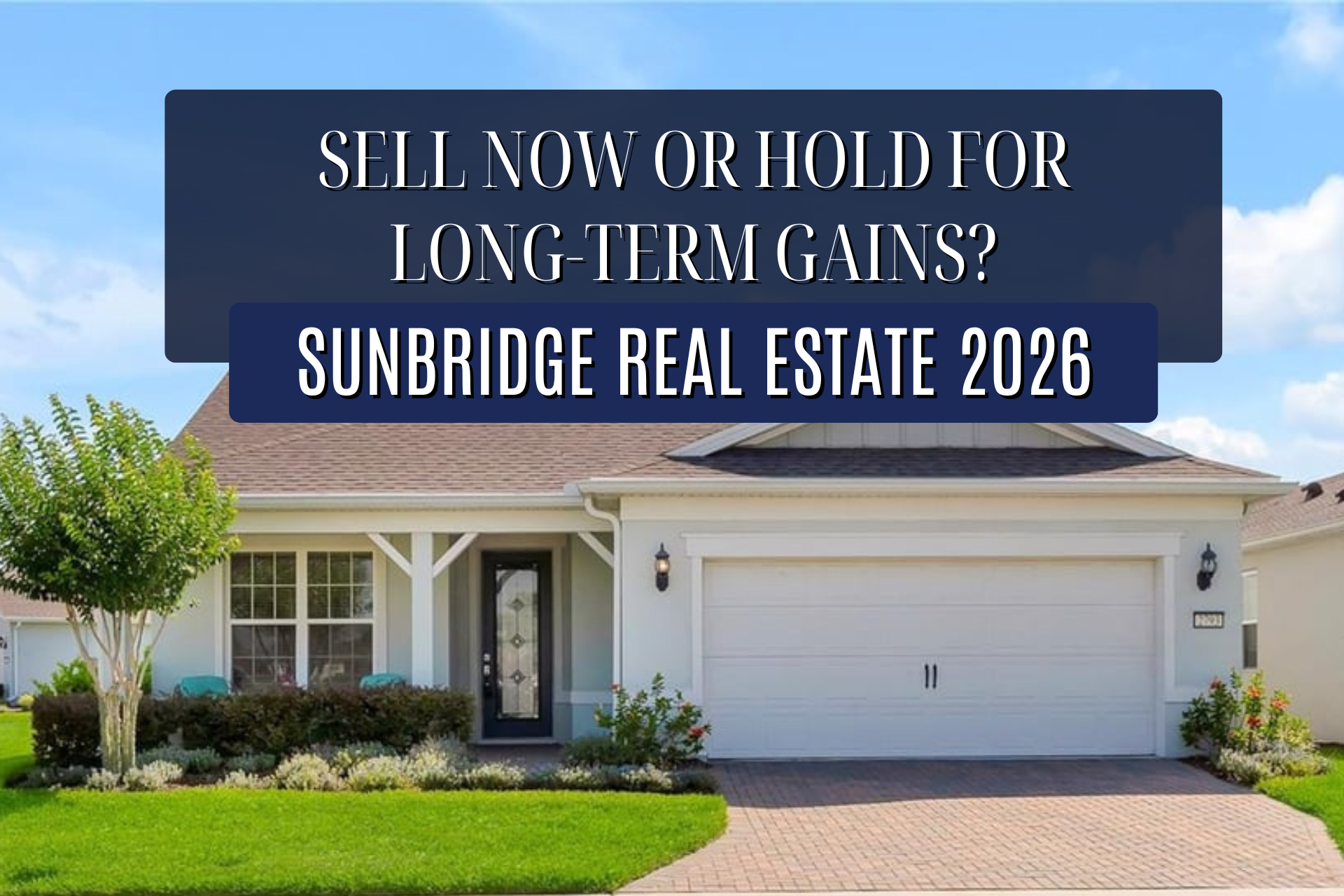
Sunbridge, Central Florida’s 27,000-acre master-planned “naturehood,” is no longer just a vision on paper. It’s becoming a fully formed community with jobs, schools, amenities, and long-term economic gravity.
For homeowners, that raises a strategic question heading into 2026:
Is this the right time to sell, or is Sunbridge still early enough that holding longer delivers better returns?
The answer isn’t emotional. It’s structural.
Below is a clear, seller-focused breakdown of what’s happening in Sunbridge, what’s coming next, and how to think about timing your exit intelligently.
Why Sunbridge Is Different From Typical Florida Communities
Sunbridge isn’t growing randomly. It’s being built deliberately.
Developed by Tavistock, the same team behind Lake Nona Sunbridge, is designed on a 30+ year timeline, with controlled housing releases, expanding infrastructure, and large-scale employment centers planned from day one.
That matters because real estate appreciation in master-planned communities doesn’t happen evenly. It happens in waves.
Early phases tend to benefit the most when:
- Infrastructure catches up
- Amenities reach critical mass
- Commercial and employment hubs come online
Sunbridge is still in that early-to-mid growth window.
What’s Already Driving Value in Sunbridge
Phased Residential Pricing
Homes in Sunbridge are released in phases, not all at once. Each new phase is typically priced $5,000–$15,000 higher than the previous one, regardless of broader market conditions.
That means:
- Today’s prices are often the lowest a model will ever be
- Early owners benefit from built-in appreciation as phases sell out
Townhomes currently start in the high $400Ks, with single-family homes generally in the low $500Ks to $600Ks+, depending on lot and upgrades.
Job Growth Anchored Inside the Community
Sunbridge isn’t just residential. The 700-acre Sunbridge Business Park is emerging as a major employment hub near Orlando International Airport.
Blue Origin’s 220,000+ square-foot facility alone brought hundreds of high-skill jobs, and additional logistics, retail, and corporate users are already securing land.
Jobs near housing create durable demand, not speculative spikes.
Amenities That Create Long-Term Demand
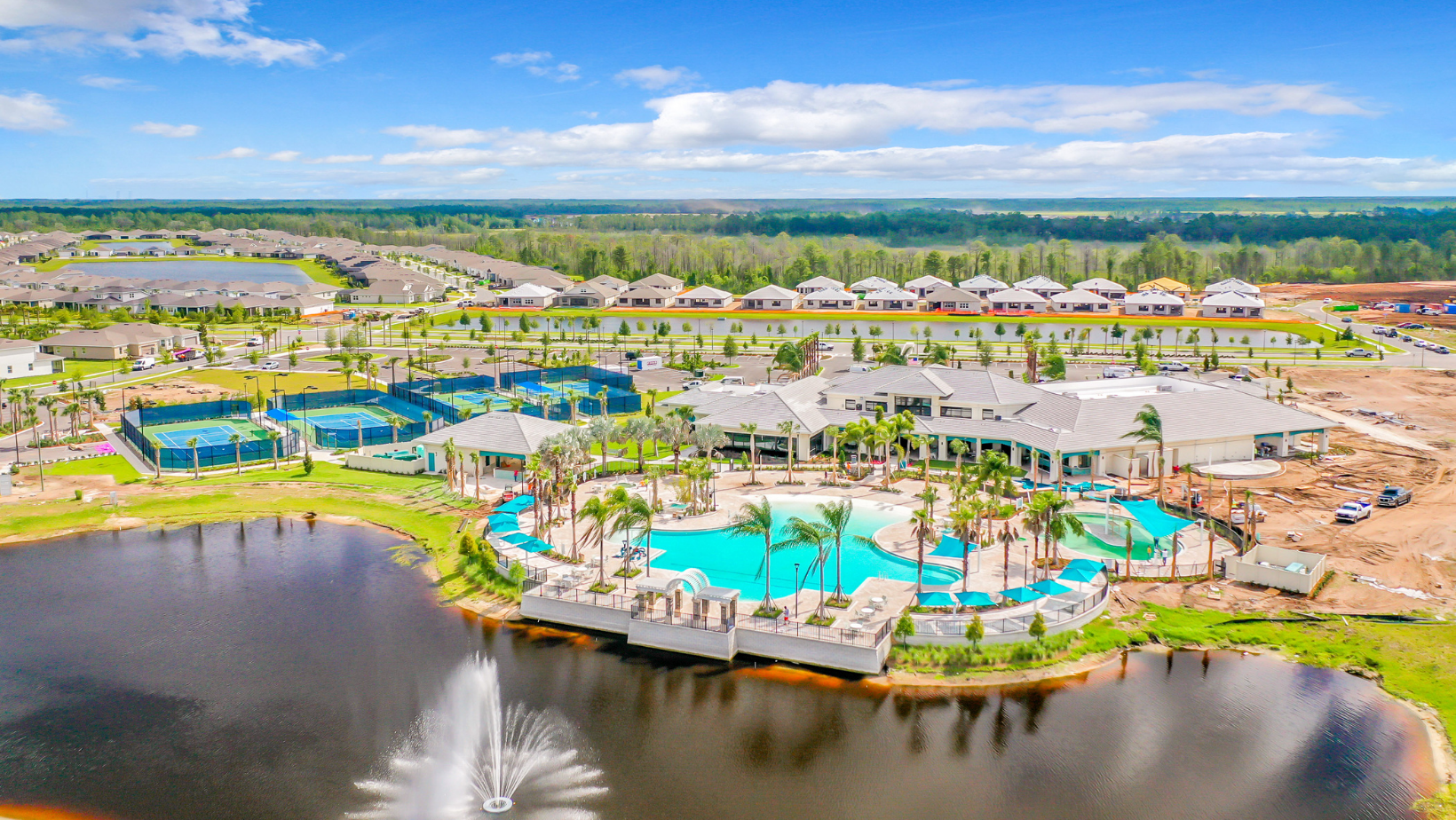
Sunbridge is intentionally designed around lifestyle and sustainability:
- Over 13,000 acres preserved as green space
- Miles of trails, lakes, and conservation areas
- Resort-style amenities in Del Webb Sunbridge
- A new Environmental STEM K-8 school is already operating
Future projects like Marina Village, a waterfront town center with dining, retail, and hospitality, will further anchor value.
These aren’t short-term selling points. They’re long-term demand drivers.
How the Broader Central Florida Market Supports Holding
Central Florida fundamentals remain among the strongest in the U.S.
- Orlando led the nation in job growth and population growth in 2024
- Florida is projected to add 300,000+ new residents annually through the end of the decade
- Employment is diversifying beyond tourism into aerospace, tech, healthcare, and logistics
This isn’t boom-and-bust growth. It’s structural migration.
Communities positioned near employment corridors like Sunbridge tend to outperform over time.
What About Renting Instead of Selling?
For owners not ready to sell, rental performance matters.
While Sunbridge’s rental market is still maturing, comparable communities like Lake Nona show:
- Strong occupancy (mid-90% range when priced correctly)
- Gross yields in the 5–7% range
- Consistent rent growth tied to job expansion
That means holding doesn’t have to mean idle equity. Many owners can cover costs—or generate income while waiting for appreciation to compound.
2025–2026 Market Conditions: Why Timing Matters
The Florida market cooled in 2023–2024 due to interest rates. That slowdown has largely stabilized, not reversed.
By late 2025:
- Sales activity began rising again
- Prices stopped declining and leveled off
- Buyer demand showed signs of returning as rates eased
For Sunbridge specifically, most inventory remains new construction, and resale supply is extremely limited. That creates leverage for sellers but also competition from builders offering incentives.
This is why timing matters:
- Selling too early risks competing with builders
- Selling later, as phases sell out, often improves resale positioning
The 5–10 Year Outlook for Sunbridge Values
This is where the sell-vs-hold decision becomes clearer.
Over the next decade, Sunbridge is expected to transition from “emerging” to “established.” Historically, that transition is where the largest appreciation occurs.
Key reasons:
- Controlled supply through phased development
- Continued population inflow to Central Florida
- Completion of commercial centers and infrastructure
- Scarcity of early-phase homes once neighborhoods are built out
Even conservative appreciation (4–6% annually) compounds meaningfully over 5–10 years. Communities like Lake Nona demonstrated how powerful this effect can be.
Sunbridge is following a similar playbook with even more emphasis on sustainability and lifestyle.
So… Sell in 2026 or Hold Longer?
For most Sunbridge homeowners, the data points toward holding.
Sunbridge is still early in its value curve. Many of the strongest catalysts employment density, retail hubs, and full amenity build-out, are still ahead.
Selling in 2026 can make sense if:
- You need liquidity for another investment
- Your personal circumstances require a move
- You’re risk-averse and want to lock in gains
But from a purely strategic standpoint, many owners who hold through the next growth phase are likely to see significantly stronger returns.
Work With a Sunbridge Exit Strategy Specialist
Sunbridge isn’t a typical resale market, and your timing shouldn’t be guessed.
Mike Chen specializes in Sunbridge-specific pricing cycles, builder phase dynamics, and long-term appreciation strategy. He helps owners decide when to sell, when to hold, and how to maximize outcomes either way.
Whether you’re considering selling in 2026 or planning a longer hold, Mike provides:
- Clear valuation based on Sunbridge phases, not generic comps
- Strategic timing guidance to avoid competing with builders
- Hold vs. sell modeling using real market data
- Resale positioning once early-phase inventory becomes scarce
This isn’t about listing faster. It’s about exiting smarter.
